
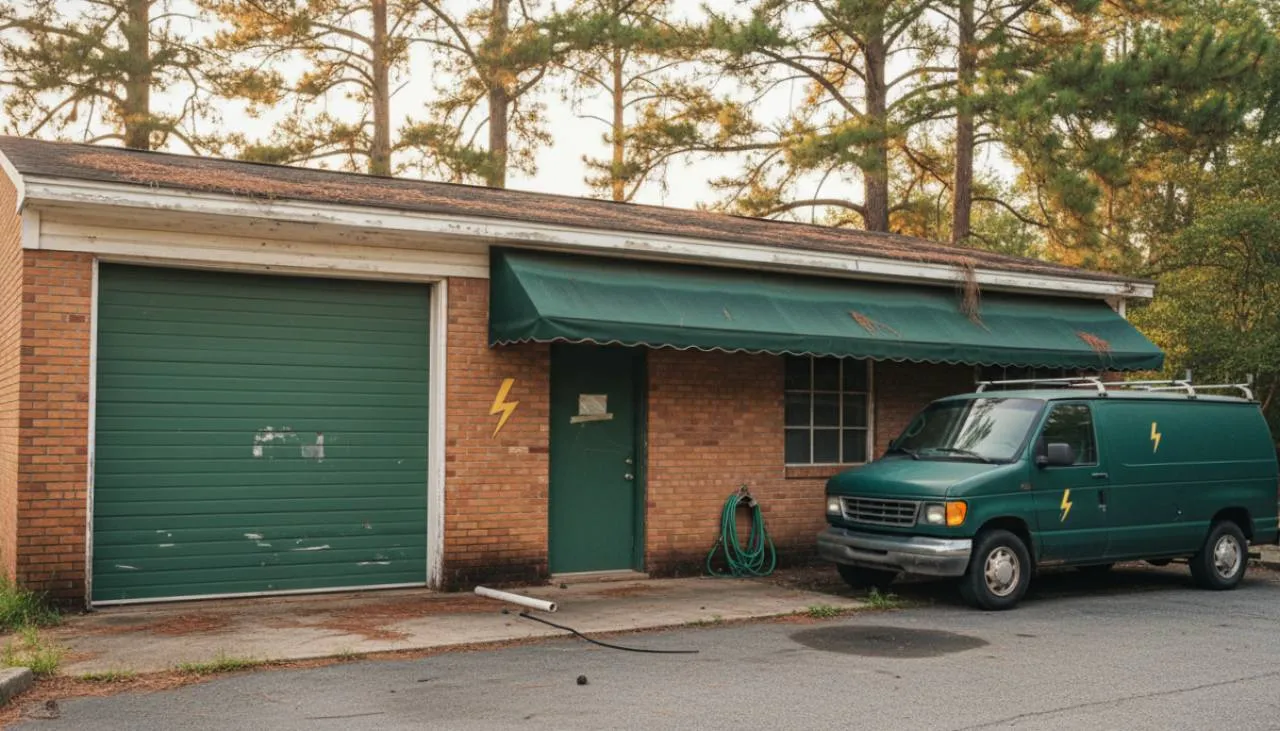
The shop
Pine Ridge Electrical works residential. Panel upgrades, kitchen and bath remodels, the occasional whole-house rewire. Four techs, one truck per crew, and Danielle Knox running the books from a converted detached garage in Garner. She got her master license in 2019 and broke off from a regional contractor a year later. Most of the work is referral.
The customers are usually homeowners mid-renovation. Realtors before a sale. Builders running small custom jobs who don't have an in-house electrician. Average ticket is two days of work and a pulled permit.
A typical week, before
A week looked like this. Monday: site visits for three new estimates. Tuesday morning: load calculations for all three at the kitchen table, because Danielle's done with field work for the day and the kids are in school. The math itself isn't hard. It's the ceremony around it.
Pull up the existing panel inventory. Add up general lighting at 3 VA per square foot. Layer on small appliance and laundry. Look up the cooktop nameplate, then the dryer, then the water heater. Apply the right demand factor for each, and remember which factor changed in the 2023 cycle. Add the largest motor at 125%. Sum it. Convert to amps. Compare to service. Hope you didn't double-count something.
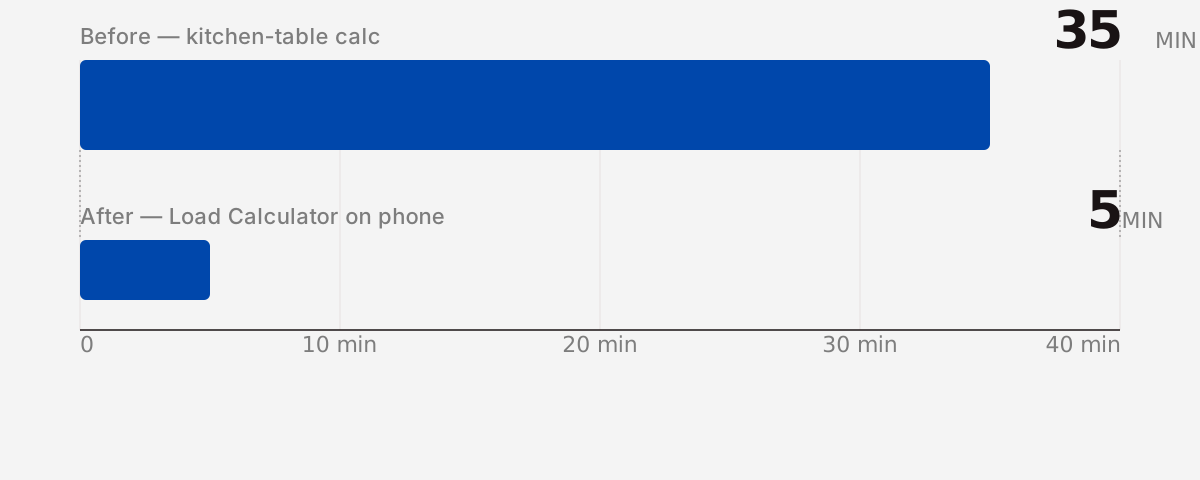
"Thirty-five minutes a calc was a good day. The bad days were the ones where I'd get to the bottom and realize I'd missed a circuit, and start over."
Three estimates, two hours at the table. Then she'd hand-draw a single-line diagram on graph paper for any panel upgrade going to permit, scan it, email it to the inspector. If anything changed during install (and something always changed), re-draw, re-scan, re-send.
The first panel upgrade with Breakerbox
The first job through Breakerbox was a 100A-to-200A upgrade in a 1962 ranch. Two-story addition, new heat pump, EV charger six months out. Standard work, slightly more circuits than the existing service could carry. That's why the customer called.
Danielle did the load calc on her phone in the driveway. She typed in the square footage, ticked the boxes for the new appliances, and dropped in the heat pump nameplate from a photo. Five minutes. The calc came back: 178 amps after demand factors. A 200A service would do it.
The Line Diagram tool drew the upgrade on the way back to the truck. Existing main, new sub for the addition, dedicated breaker for the EV circuit when it lands. She tweaked two labels, exported the PDF, and emailed it to the homeowner before pulling out of the driveway.
| Step | Before | With Breakerbox |
|---|---|---|
| Load calc | 35 min at the kitchen table | 5 min on the phone |
| Line diagram | Hand-drawn, scanned, re-scanned on changes | Drawn in app, exported clean PDF |
| Estimate turnaround | 1–2 days | Same day |
The estimate went out that afternoon. The customer signed the next morning.
What it looks like now
A week now looks different. Site visits Monday morning. Load calcs done in the truck between visits, not at the kitchen table at 7 PM. Estimates out the same day. Line diagrams drawn in the same app, exported to PDF, emailed to inspectors and homeowners without the scan-and-resend dance.
"The kitchen table is back to being a kitchen table."
The bigger shift isn't the time saved. It's the confidence. Danielle's not second-guessing whether she added the dryer twice. The calc is repeatable. If a customer asks why the service has to go from 100A to 200A, she shows them the line item that pushed it over. Usually the heat pump or the EV charger.
Inspections have gone smoother too. The line diagrams are legible. The calc backs up the panel size on the permit. The conversation with the inspector is about the install, not the paperwork.
What's next
Pine Ridge is hiring a fifth tech in the spring. Danielle's planning to put the new hire through Breakerbox first thing. Calc out a couple of practice jobs, draw the diagrams, see the math. The way she sees it, a tool that takes the load calc from 35 minutes to 5 also makes it teachable. You can't pass down a 35-minute kitchen-table workflow to a new hire. You can pass down a 5-minute one.
The EV side of the work is growing too. Charger installs were 5% of jobs in 2024, closer to 15% now. Each one is a load calc that has to be right the first time. Danielle expects to lean harder on the Load Calculator there, especially for the borderline 100A panels where adding 48 amps of charger means the answer is "upgrade first."
Two days a week back from the kitchen table. One tool that does the load calc, one tool that draws the diagram. End of story.