
You ran the load calc on the existing 100 A service. It came back at 112 A with the 48 A Level 2 EVSE added in. The homeowner is still inside, the meter is still spinning, and now you have to walk in and explain why the EV charger they thought was a $1,500 install is actually a $3,500 job. Most articles on this keyword tell the homeowner whether they need an upgrade. This one is for you, after the answer is yes.
TL;DR: When the load calc trips on an existing 100 A service, the panel upgrade scope is meter base + service-entrance conductors + 200 A panel + grounding electrode system retrofit + permit + utility coordination — typical residential bid lands $2,000-$4,000 (Qmerit National Charging Outlook, 2024). The job is 4-6 weeks because the utility owns 3 of those weeks, not you. This playbook hands you the line-item scope, the sequence, the 2023 NEC pull-ins, the customer script, and the four times to walk away.
A quick disclosure: I'm Nick Peralta-Baron. I own a 4-tech residential shop in the Northeast and we have done somewhere north of 80 EV-triggered service upgrades since 2022. This piece is anchored to the 2023 NEC. Adoption is jurisdiction-dependent — confirm your cycle before you stamp the bid. The pricing bands here are 2026 northeast averages. Your market will skew.
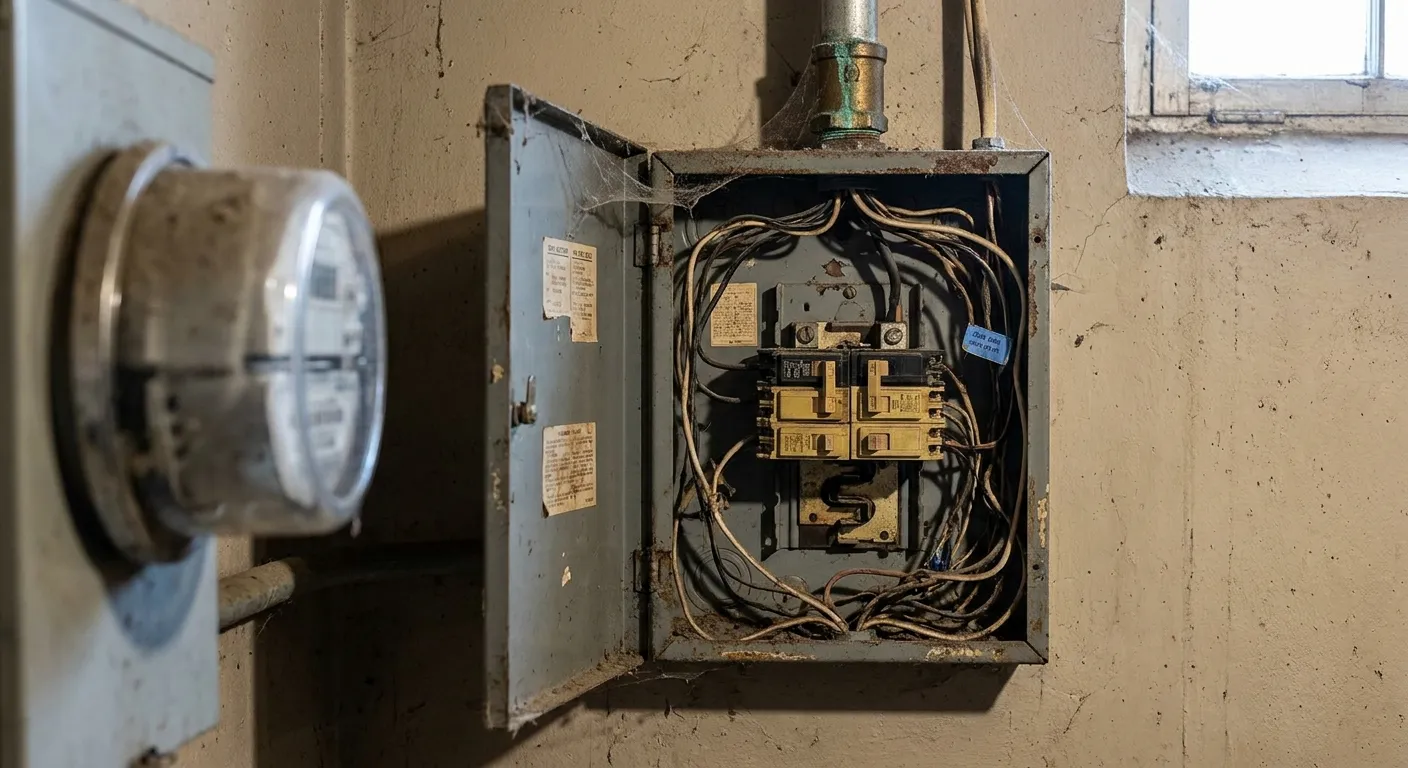
When does the load calc actually trip the panel upgrade?
The trigger is simple. Run the EVSE addition through NEC 220.83 or 220.82. If the calculated load exceeds 80% of the service rating, the service has to grow. On a 100 A service that ceiling is 80 A. A 48 A continuous EVSE adds 14,400 VA (60 A at 240 V after the 1.25 continuous multiplier per NEC 625.42, 2023). Most 1970s 100 A services are already running 60-75 A of measured baseline load. The math does not survive.
If you want the method walked line-by-line on the same house with both NEC paths, the load calc came back hot walkthrough has it. If you want to push the numbers yourself in 90 seconds, the Breakerbox Load Calculator runs 220.82 and 220.83 side by side. If the trigger is a heat pump and not an EVSE, the heat pump electrical requirements piece picks up there.
Panel upgrade vs. service upgrade vs. sub-panel — the three things customers confuse:
- Sub-panel addition. New breaker space, same service rating. Cheapest option. Useless if the calc trips at the service entrance.
- Panel upgrade. Replace the main panel itself, often with a higher amperage rating, but service entrance and meter base stay. Rare on residential because the utility usually requires the whole service to come current.
- Service upgrade. Full re-pull. Meter base, service entrance conductors, main panel, grounding system, sometimes the mast and weatherhead. This is the job that gets quoted as a "panel upgrade" 90% of the time.
When the existing 100 A service trips the calc, you are quoting a service upgrade. Call it that internally. Call it a panel upgrade in front of the customer because that is what they searched for.
Customer script: "Your service was sized for 1970s loads. A Level 2 charger pulls the equivalent of a second oven running six hours a day. The existing service can't hold both."
A 2024 Qmerit analysis of 25,000+ residential EV installs put the upgrade-required rate at roughly 30% — the rest of the country lives on 200 A services that absorb the EVSE without a re-pull. You are in the 30%. The reframe matters because every competitor's article reassures the homeowner they probably don't need this. You are not selling against that doubt — you are selling against the homeowner's expectation that they were the 70%.
What does the scope of work actually include, line by line?
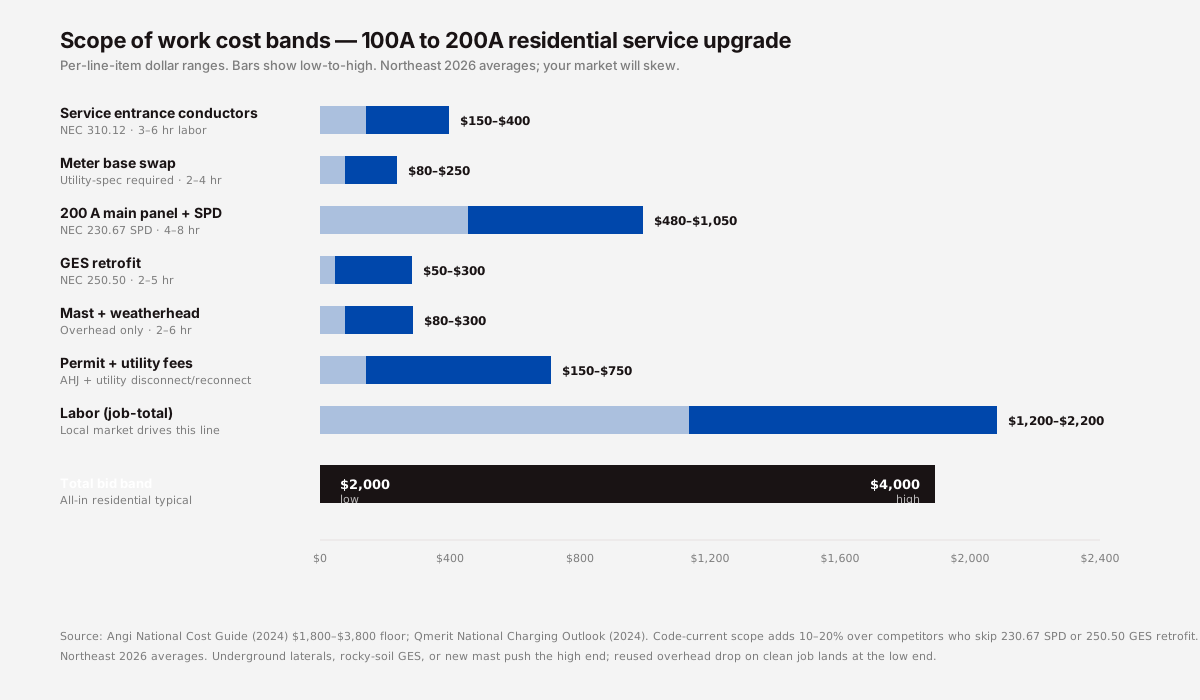
The full re-pull is six line items and one paperwork stack. Typical residential bid lands $2,000-$4,000 all-in (Angi National Cost Guide, 2024 — $1,800-$3,800 floor; we add 10-20% on top for code-current scope competitors skip). Here is what each line item is and why it cannot get cut.
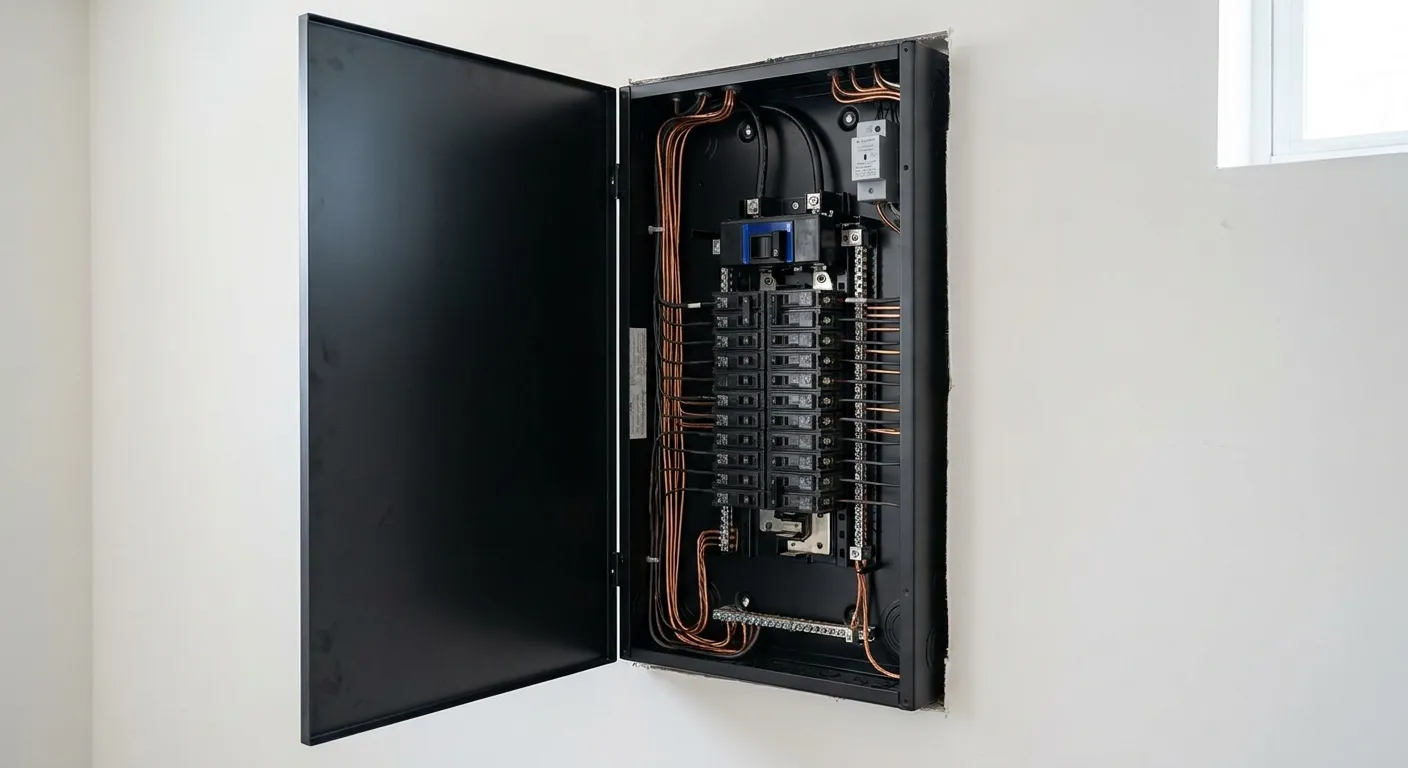
Service entrance conductors
The wires from the utility drop or the underground lateral to the meter base. On a 200 A residential service, 4/0 aluminum SER or 2/0 copper SE is the standard. Overhead jobs reuse the existing drop if the utility allows it. Underground jobs almost always need a new lateral pulled.
- Labor band: 3-6 hours
- Material band: $150-$400
- Why it cannot get cut: existing 100 A conductors are physically undersized for a 200 A service per NEC 310.12. The AHJ catches this on inspection if you reuse.
Meter base swap
The 200 A socket has to be utility-spec. Every utility publishes a list. Generic 200 A meter sockets from the supply house get rejected on inspection in roughly half the jurisdictions we work in.
- Labor band: 2-4 hours
- Material band: $80-$250
- Why it cannot get cut: the existing 100 A socket has a 100 A lug landing. Cannot terminate 4/0 there.
Main panel
200 A, 40-space, SPD-ready per NEC 230.67 (2023). The SPD requirement is the line item that gets challenged most by the homeowner. Hold the line — see the NEC section below.
- Labor band: 4-8 hours
- Material band: $400-$900 panel + $80-$150 SPD
- Why it cannot get cut: the EVSE breaker has to land somewhere with continuous-load headroom.
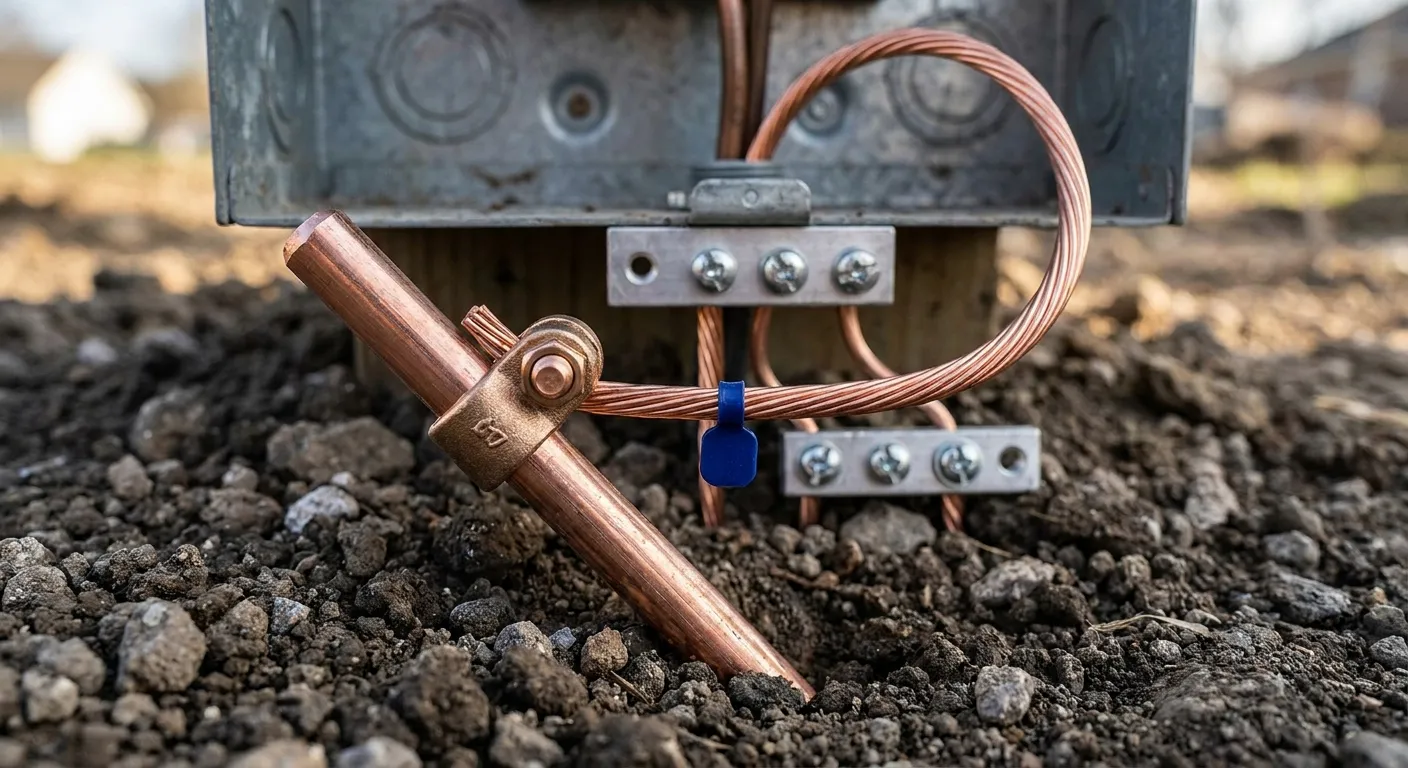
Grounding electrode system retrofit
The line item that surprises homeowners most on the bid. NEC 250.50 requires all available electrodes to be bonded — water pipe, rebar in foundation footing if accessible, ground rods, structural steel. On a 1970s house, the existing GES is usually a single ground rod and a water pipe bond that was never updated when the plumbing went to PEX.
- Labor band: 2-5 hours
- Material band: $50-$200 (rods, clamps, #6 bare copper)
- Why it cannot get cut: 250.50 is enforced on the re-pull. Skipping it is how competitors underbid you and how their work gets red-tagged.
Mast, weatherhead, drip loop
Overhead service only. If the existing mast is steel and the utility is satisfied with it, you reuse. If it is the old galvanized one-and-a-quarter and the utility wants two-inch rigid, that is a new mast.
- Labor band: 2-6 hours depending on roof access
- Material band: $80-$300
- Why it cannot get cut on new mast jobs: the utility will not connect the drop until the mast meets their spec.
Permit + utility disconnect/reconnect + inspection
The paperwork stack. Permit fee runs $75-$250 depending on AHJ. Utility disconnect/reconnect is sometimes free, sometimes $150-$500. Rough and final inspection are usually bundled into the permit fee but a few AHJs charge per visit.
- Labor band: 2-4 hours of admin (sized job, not panel time)
- Material band: $150-$750 in fees
- Why it cannot get cut: there is no off-permit version of this job.
Run the new 200 A service back through the Breakerbox Load Calculator before you finalize the bid. If the calc still trips at 80% with the homeowner's stated future loads — heat pump, induction range, second EV — the conversation shifts again.
Which 2023 NEC sections get pulled in when you re-pull the permit?
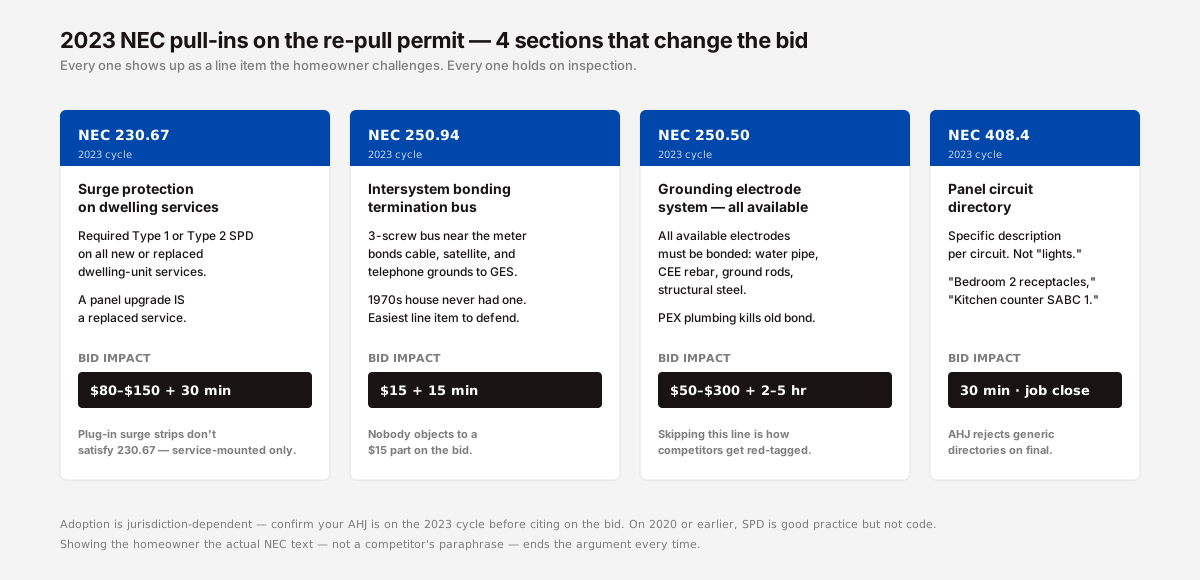
Four sections get pulled in that did not exist on the 1970s install. Every one of them shows up as a line item the homeowner challenges and every one of them holds on inspection. Track them by code citation on the bid — when a competitor underbids you by skipping these, the citation is what wins the call-back.
NEC 230.67 — Surge protection on dwelling services
Required on all new and replaced dwelling-unit services in the 2023 cycle. The homeowner asks why an SPD costs $150 when they can buy a power strip with surge protection for $25. The answer is that 230.67 requires a Type 1 or Type 2 SPD on the service, not a plug-in unit. Real numbers: $80-$150 material, 30 minutes of labor.
Self-contained answer — is the SPD really required on a like-for-like 200 A swap? Yes. NEC 230.67(B) (2023) requires SPD on any new or replaced dwelling-unit service. A panel upgrade is a replaced service. Adoption varies — confirm your jurisdiction is on the 2023 cycle before you cite it on the bid. If your AHJ is on 2020 or earlier, the SPD is good practice but not code, and you list it as optional.
NEC 250.94 — Intersystem bonding termination
The little three-screw bus that lives near the meter base and bonds the cable, satellite, and telephone grounds to the GES. The 1970s house never had one. Material is $15. Labor is 15 minutes. It is the easiest line item on the whole bid to defend because nobody objects to a $15 part.
NEC 250.50 — Grounding electrode system
All available electrodes must be bonded. The retrofit cost varies wildly. If the concrete-encased electrode (the rebar in the footing) is accessible through a basement penetration, easy. If the soil is rocky and you cannot drive two 8-foot rods, you are chasing supplemental electrodes and the line item grows. This is the GES retrofit cost that surprises homeowners.
NEC 408.4 — Panel directory
Every circuit gets a specific description. Not "lights" or "outlets." Bedroom 2 receptacles. Kitchen counter SABC 1. The AHJ catches generic directories on final inspection and rejects them.
Pull every citation through the Breakerbox Code Lookup when the homeowner asks for the source. Showing them the actual NEC text — not a competitor's paraphrase — ends the argument every time.
| Code | What it requires | Bid impact |
|---|---|---|
| NEC 230.67 | Type 1 or 2 SPD on dwelling service | $80-$150 material, 30 min labor |
| NEC 250.94 | Intersystem bonding termination bus | $15 material, 15 min labor |
| NEC 250.50 | All available electrodes bonded | $50-$300 material, 2-5 hr labor |
| NEC 408.4 | Specific circuit directory at panel | 30 min labor at job close |
How do you sequence the utility coordination over 4-6 weeks?
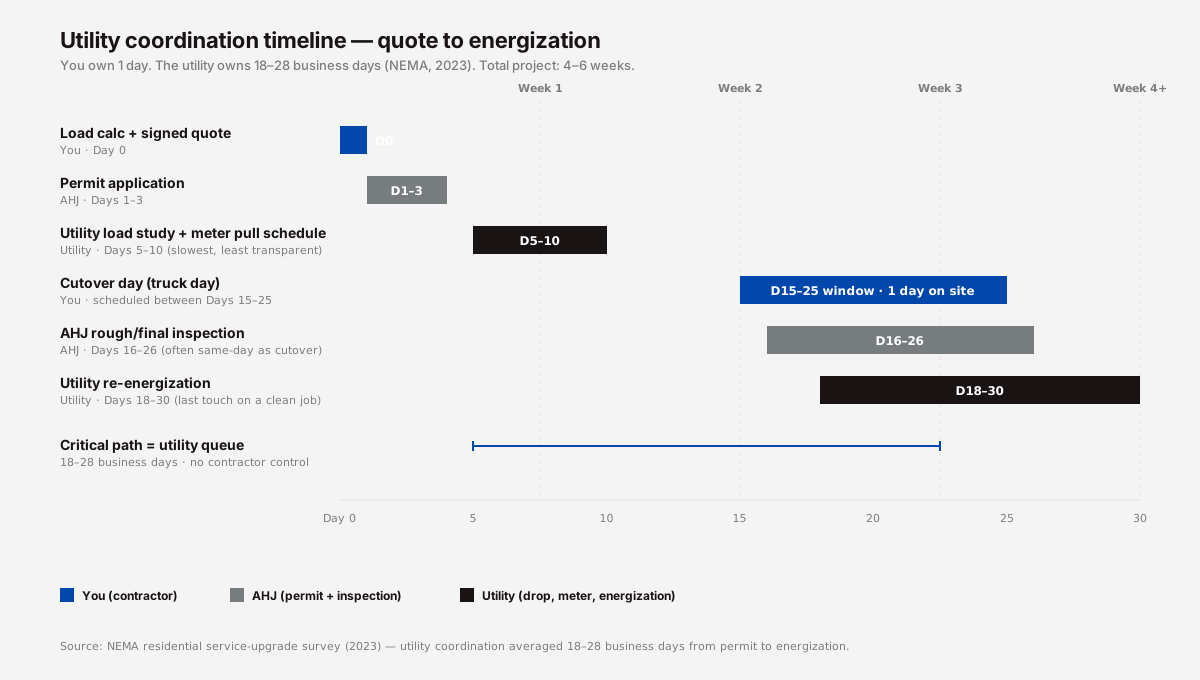
The utility owns three of the four to six weeks. That is the headline. The homeowner wants to know why a one-day job takes a month, and the answer is that you are on the truck for one day, the inspector is on site for two hours, and the utility owns everything in between. A 2023 NEMA service-upgrade survey averaged residential utility coordination at 18-28 business days from permit to energization. Your number lands inside that.
Here is the sequence I run on every job.
- Day 0 — load calc + signed quote. Load calc result attached to the bid. 50% deposit collected. Signed scope sheet that names every line item from the scope section above. This is the day the clock starts.
- Day 1-3 — permit application. Submit to the AHJ. Most online portals turn it in 1-3 business days. Some take a week. Pad two extra days if the AHJ is on paper.
- Day 5-10 — utility load study + meter pull schedule. The utility reviews the load study, confirms the drop or lateral can carry the new service, and schedules a meter pull. This is the slowest leg and the one with the least transparency. Call the utility coordination line on day 7 if you have not heard back.
- Day 15-25 — cutover day. You pull the meter (utility witnesses on most systems), swap the service, rough-in the new GES, terminate the panel, install the SPD and IBT, label the directory, and call for rough inspection. Sometimes rough and final are bundled on a same-day pass.
- Day 16-26 — AHJ inspection. Same week as cutover ideally. Some AHJs require 48-72 hours notice for inspection.
- Day 18-30 — utility re-energization. Utility comes back, sets the new meter, re-energizes the service. Homeowner gets the power back. On a clean job this is the last touch.
The frame for the homeowner: "We're on the truck for one day. The utility owns the rest. We will call you the moment they confirm the cutover date."
What's the customer-conversation script that closes the bid?
The script has five beats. I have used some version of it on every signed EV-trigger upgrade we have closed since 2022. The hit rate sits around 80% when the load calc actually failed — versus around 50% in 2022 when I was walking in without the script and trying to explain it freehand.
Beat 1 — the trigger. "Your existing 100 A service was sized for 1970s loads. The Level 2 charger adds the equivalent of a second oven running six hours a day. The load calc came in at 112 A. The service can safely carry 80. The numbers do not work."
Beat 2 — the scope, as line items. Walk the bid line by line. Meter base, service entrance, panel, GES, mast, permit, utility fee. Transparency builds trust. Pricing on a single line ("$3,200 total") gets challenged. Pricing on seven lines with code citations gets signed.
Beat 3 — the timeline. "We are on the truck for one day. The utility owns three weeks of the schedule. The whole project is four to six weeks from today. We will call you the day they confirm the cutover."
Beat 4 — objection handling. Three real objections in this order, every time:
- "Why is the upgrade more than the EV charger itself?" — "The charger is the trigger, not the cost. The cost is the service you have been deferring since the house was built. The charger just made it visible."
- "Can't you just add a sub-panel?" — "A sub-panel adds breaker space. It does not add service capacity. Your service entrance is the bottleneck. The math fails at the meter, not at the panel."
- "Why does the utility take three weeks?" — "Because they have to confirm the drop can carry it, schedule a meter pull, and send a crew. We have no control over their queue. We will push every Friday until you are scheduled."
Beat 5 — the close. Signed scope sheet, 50% deposit, permit submitted same week. Tell them when the next milestone email is going out. Set the expectation that the utility leg is opaque and they will not hear from anyone for 10-14 days after permit is in.
Pull-quote: "The upgrade isn't the EV charger bill. It's the bill the 1970s service deferred."
The customer script flow:
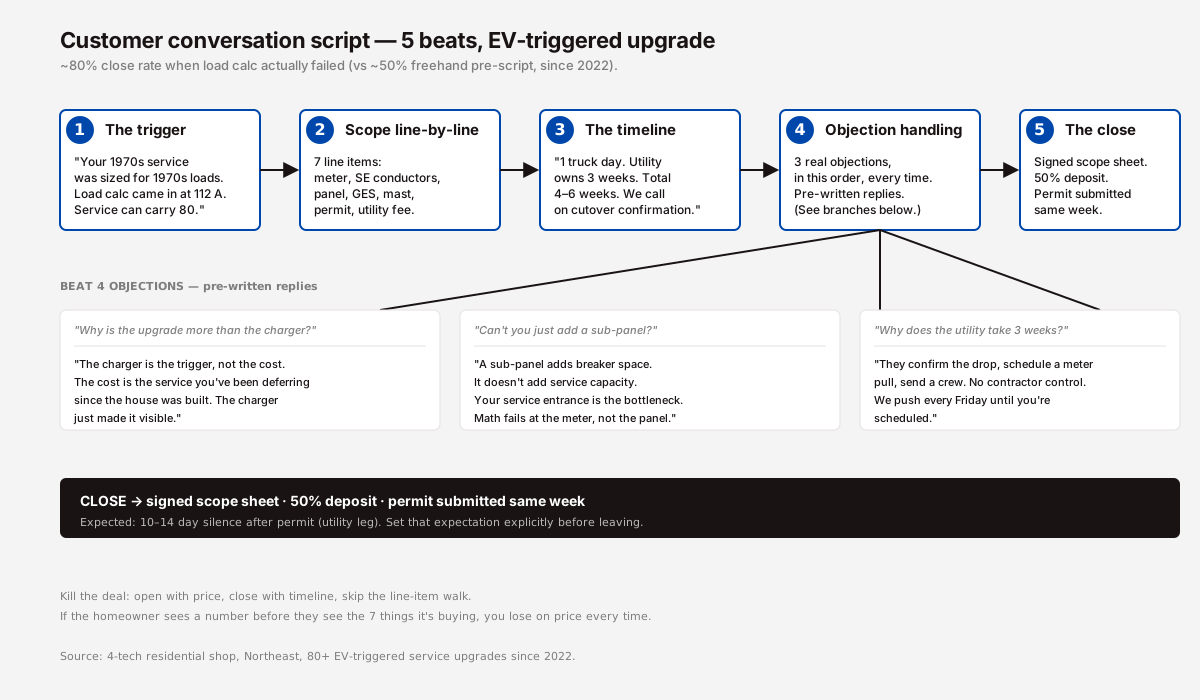
What kills the deal: opening with the price. Closing with the timeline. Skipping the line-item walk. If the homeowner sees a number before they see the seven things it is buying, you are losing on price every time.
When should you walk away from the job?
Four walk-aways. I have lost money on all four at least once before I learned to name them.
Walk-away 1 — the competitor bid is materially lower and they are skipping the GES retrofit or the SPD. Show the homeowner the citations. Walk them through what gets buried under the meter base. If they choose the cheap bid anyway, walk. Do not try to match the bid by cutting code. Your name is on the permit.
Walk-away 2 — the GES retrofit blows the bid past sensible. Rocky soil, no accessible water pipe, no concrete-encased electrode available, plumbing went to PEX. Now you are chasing supplemental electrodes and the GES line balloons to $800-$1,200 on its own. Walk when the GES line item exceeds 20% of the total bid — the homeowner will not see the value and a competitor will underbid you on this exact line.
Walk-away 3 — the utility queue is nine months out. Some utilities in growth markets are quoting 30+ week service upgrade queues. If the homeowner cannot wait that long and is pressuring you to "just energize it temporarily," walk. Temporary work that becomes permanent kills shops.
Walk-away 4 — FPE, Zinsco, or Stab-lok panel in a rental with an absentee landlord. The panel needs replacement under any scope. The landlord will not pay. The tenant cannot authorize. The job becomes a liability magnet. Walk.
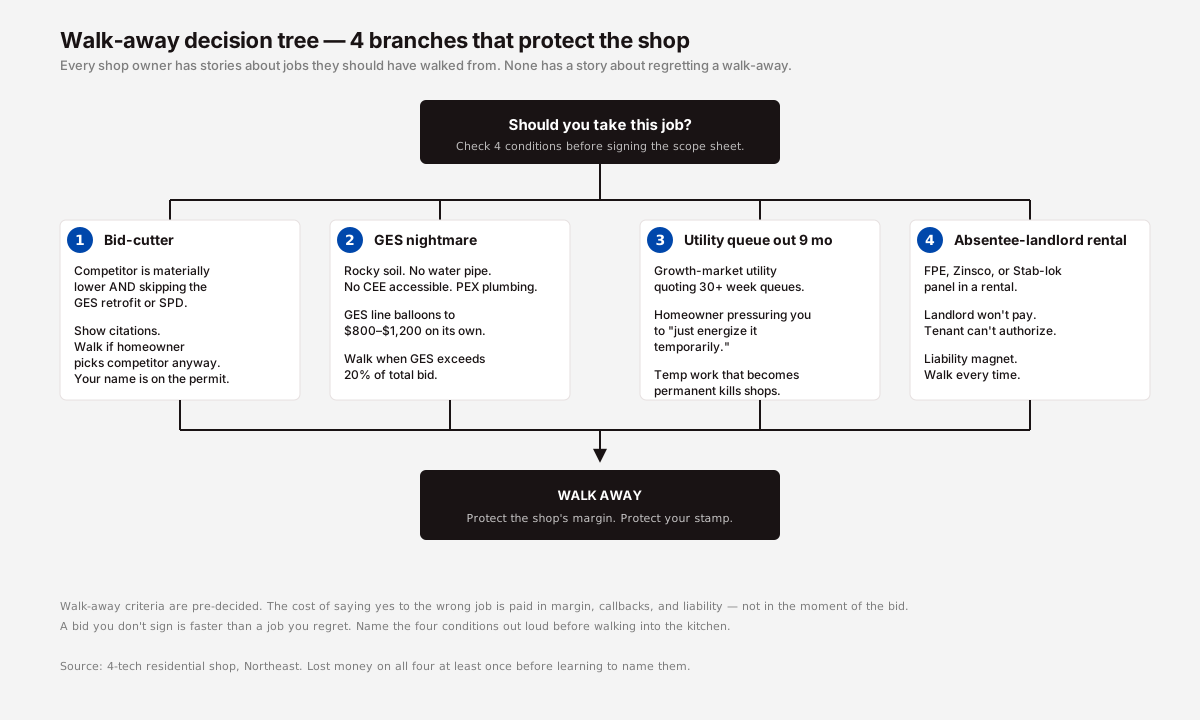
The walk-away criteria protect the shop's margin and your stamp. Every shop owner I know has stories about the job they should have walked from. None has a story about regretting a walk-away.
Frequently Asked Questions
How much does an EV charger panel upgrade actually cost in component line items?
Typical residential 100 A to 200 A service upgrade lands $2,000-$4,000 all-in: meter base $80-$250, service-entrance conductors $150-$400, 200 A panel $400-$900, SPD $80-$150, GES retrofit $50-$300 (Angi National Cost Guide, 2024). Add $150-$750 in permit and utility fees. Labor runs $1,200-$2,200 depending on local market.
Can a 100-amp panel handle an EV charger without an upgrade?
Sometimes. Run NEC 220.83 with the EVSE addition. If the calculated load lands under 80 A, you can use load management to time-share the EVSE with the dryer or range. Above 80 A calculated, the math fails and the service has to grow. The Breakerbox Load Calculator (NEC 220.83 path, 2023) runs the threshold in 90 seconds.
How long does an EV charger panel upgrade take from quote to energization?
Four to six weeks on a typical residential job. You are on the truck for one day. The utility owns 18-28 business days for load study, meter pull scheduling, and re-energization (NEMA service upgrade survey, 2023). AHJ permit review adds 1-3 business days. Inspection adds 0-2 days. The utility leg is the bottleneck.
Do you need a permit to install an EV charger that requires a panel upgrade?
Yes, always. The panel upgrade is a service-changing project that touches utility infrastructure and falls under NEC 230 (2023). Every AHJ requires a permit for a service upgrade. Permit fee runs $75-$250 depending on jurisdiction. Inspection is required at rough-in or before re-energization, depending on local practice.
Is a 200-amp panel enough for an EV charger plus future heat pump and induction range?
For most 2,200-3,000 sq ft houses, yes. Run the load calc with all future loads stacked. A 48 A EVSE (14,400 VA), a 36,000 BTU heat pump (about 9,600 VA at design), and an induction range (about 8,000 VA at demand) calculated through NEC 220.82 typically lands at 145-165 A — under the 160 A safe ceiling. If the calc trips, you are quoting 320 A or a service split.
Can you install an EV charger without upgrading the panel using load management?
Yes, below the threshold. Smart load management (NEC 750.30, 2023) lets the EVSE share a circuit's capacity with another major appliance and steps down when that appliance draws. The threshold flips at roughly 75-80 A calculated load on a 100 A service — above that, load management cannot keep the math under 80%, and the upgrade is required.
Conclusion
The load calc is the trigger. The scope is component-by-component. The timeline belongs to the utility, not you. The script wins the conversation. The walk-aways protect the shop.
- Run the EVSE addition through 220.82 or 220.83 before you talk price.
- Quote the upgrade as seven line items with NEC citations next to each one.
- Set the 4-6 week expectation up front and name the utility as the bottleneck.
- Hold the line on the SPD, the IBT, and the GES retrofit. Code-current is the moat.
- Walk away from the bid-cutters, the GES nightmares, the long utility queues, and the absentee-landlord rentals.
Run the next load calc through the Breakerbox Load Calculator. Pull the code citations through the Breakerbox Code Lookup. The fastest bids are the ones where the math and the citations are on the table before the conversation starts.